
They Tried To Ban The Machines Before You Voted
The pretext was "security." The target was who gets to count.
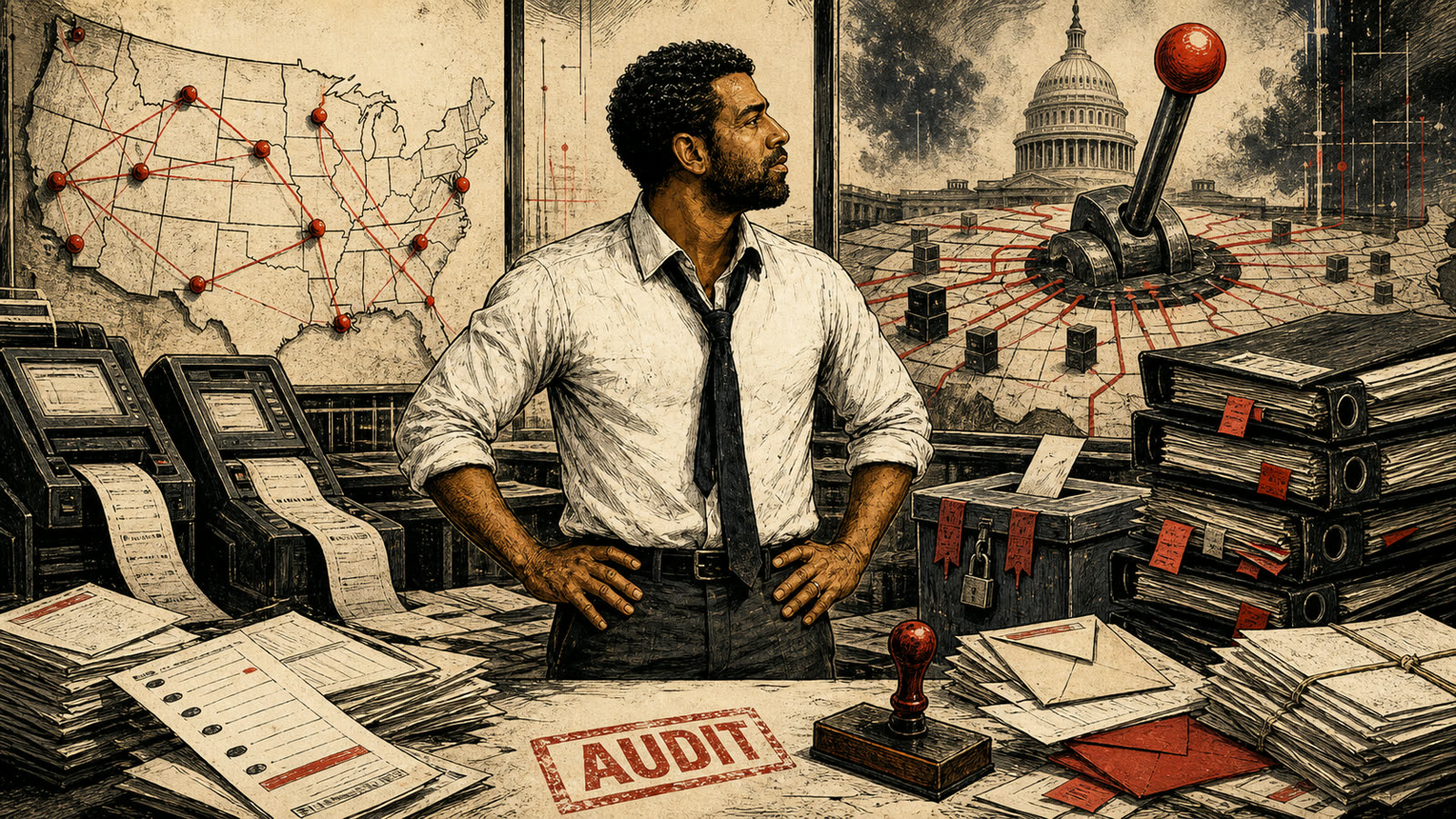
The cold open
The thing about stealing an election is that the cleanest version happens before most people know the election has started.
Not at midnight. Not in a basement. Not with a suitcase of ballots and a blurry clip passed around by men who have monetized panic.
The smarter move is earlier.
Change the rules. Change the list. Change the machines. Change who gets to mail a ballot. Change who gets purged. Change who gets counted quickly enough to matter. Then call the whole thing "integrity" and ask why anyone who objects is afraid of a secure election.
That is why the Reuters report this week matters.
On Friday, Reuters reported that Trump officials explored a plan to ban Dominion voting machines used in more than half of U.S. states by asking whether the Commerce Department could declare components in those systems a national-security risk. The effort, Reuters reported, was pushed by White House adviser Kurt Olsen, a lawyer tasked with trying to prove Trump's long-debunked election-rigging claims.
The reporting says the administration was not sitting on proof of a stolen election. It was looking for a way to make the old story useful again.
The pretext was security. The target was control.
The confession
I know the seduction of the big dramatic scene.
It is easier to imagine democracy dying in a single cinematic moment. A door kicked open. A server seized. A judge bribed. A ballot box stuffed under harsh fluorescent light.
But the real danger usually has a memo. A deadline. A legal theory. A procurement question. A "temporary" database. A word like integrity placed over a machine built to decide who gets friction and who gets power.
That is the part we keep missing. The modern playbook does not need to cancel the election if it can control the inputs before the election arrives.
The steal happens before Election Day.
The machine
Start with the machines.
According to Reuters, Olsen and other officials discussed how the federal government might take control over elections from the states. One idea was to target Dominion Voting Systems machines by asking whether the Commerce Department could classify their components as national-security risks. Reuters reported those machines were used in more than half of U.S. states.
That is not a small administrative dispute. That is a federal power play pointed at the infrastructure that counts votes.
And the timing is the tells-on-itself part. The story did not land in a vacuum. It landed the same week AP reported judges in Maine and Wisconsin dismissed Justice Department efforts to force states to hand over voter registration information. AP also reported that the DOJ has sued at least 30 states and the District of Columbia seeking detailed voter data.
Then there is the voter-list project.
AP reported the administration has run at least 67 million voter registrations through a DHS verification program, primarily from Republican-controlled states, with critics warning that eligible voters can be flagged as noncitizens or dead.
Then there is the mail-ballot order.
Civil-rights groups and Democrats are in court over Trump's March 31 executive order seeking to create eligible-voter lists and limit mail ballots. AP reported lawyers argued the president exceeded his authority because the Constitution gives election-rule power to states and Congress, not the president.
Machine bans. Voter-roll grabs. Eligibility scans. Mail-ballot lists.
Do not treat these as four stories. Treat them as one architecture.
The receipt
The Reuters machine story matters because the government did not need to prove the conspiracy theory to weaponize it.
If the lie can make people distrust the machine, the next move is to replace the machine, ban the machine, audit the machine forever, seize the machine, or write new rules around the machine. The conspiracy becomes the permission slip.
Real election security is specific. It has testing, certification, paper records, audits, chain of custody, public procedures, and state officials who can be held accountable.
The Election Assistance Commission keeps a federal certification list for voting systems. CISA has published real vulnerability advisories and real mitigation guidance, including post-election audits of human-readable paper records. That is what grown-up security looks like: find the vulnerability, publish the mitigation, preserve the paper trail, audit the count.
That is very different from taking a debunked political grievance and looking for a federal lever big enough to knock out machines across half the states.
One is security.
The other is pretext.
The translation
Here is the grocery-store version.
Imagine your landlord has been screaming for years that your lock is fake. Inspectors check the lock. The story does not hold up. The landlord keeps screaming anyway. Then one day you learn the landlord has been asking whether the city can declare your lock illegal and replace it before your lease renewal.
That is not about the lock anymore.
That is about who controls the door.
The same logic applies here. When a president and his allies keep attacking the machinery of voting after the evidence fails, the attack is no longer an investigation. It is a governing strategy.
If they can make you distrust the count, they can justify taking control of the count.
If they can take control of the count, they do not have to persuade as many voters.
That is the machine.
The verdict
There is no patriotic version of using federal power to hunt for a pretext to ban voting machines before a midterm election.
There is no pro-democracy version of pressuring states for voter rolls, building federal eligibility lists, narrowing mail ballots, and floating machine bans while insisting the whole thing is just about integrity.
Integrity would mean proving the claim before moving the machinery.
They moved toward the machinery because the claim kept failing.
That is the story.
The steal happens before Election Day.
State of the Race
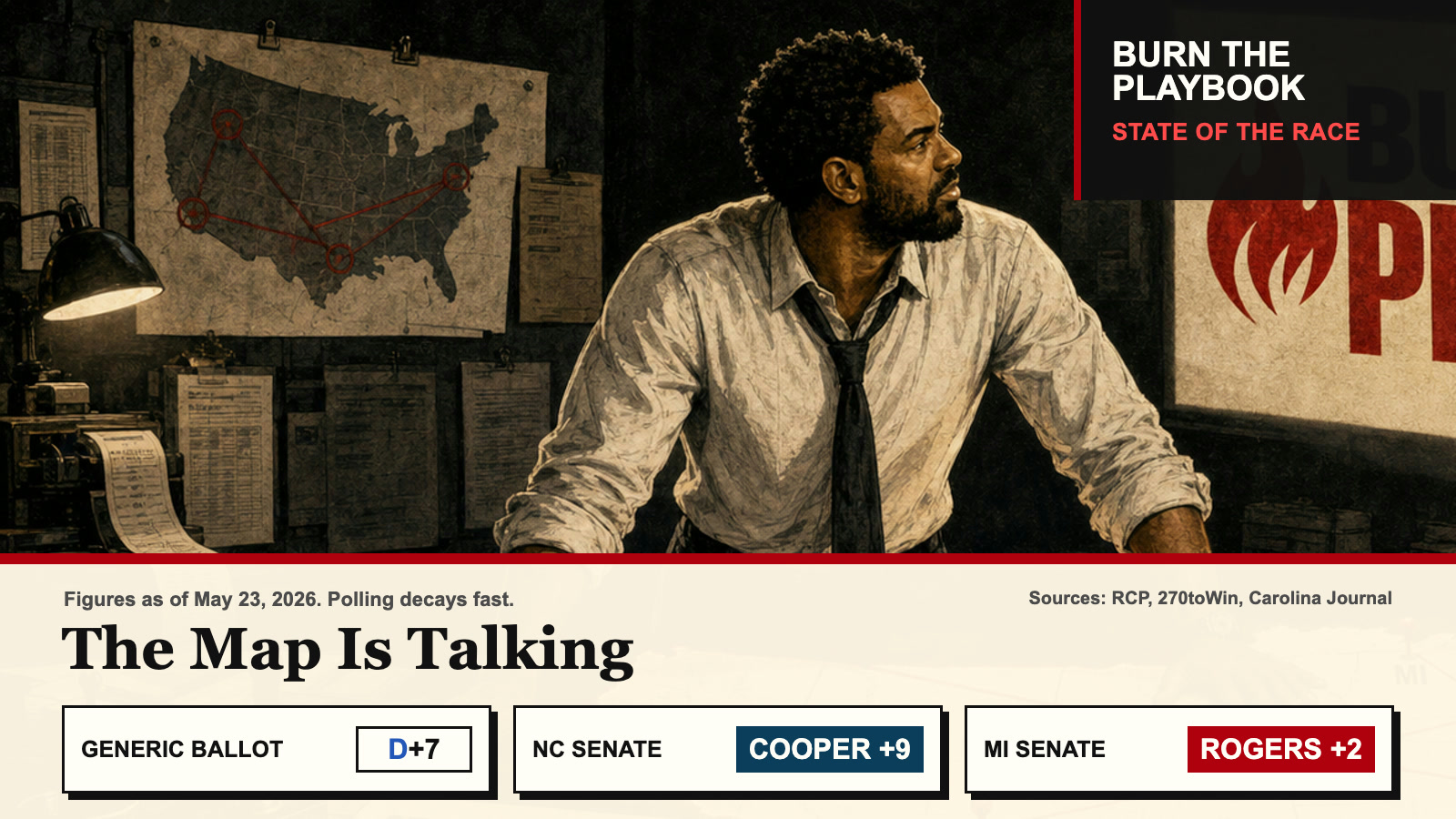
The map is already talking. The national generic ballot is sitting around a Democratic advantage, North Carolina's Senate race is flashing blue, and Michigan is already tight enough to warn everybody paying attention. The fight is not abstract. It is arriving in the states that decide power.
That is why the machinery story cannot be treated like a side quest. When the rules fight moves first, the race is already under way.
What to do this week
Forward this to one person who still thinks election theft only happens after polls close.
Then ask your state officials the only questions that matter right now: what voting systems are used in your county, what paper record exists for every ballot, what audit happens after the election, whether your state received a DOJ voter-roll demand, and what cure process protects eligible voters who are wrongly flagged.
Reader Poll
Which door worries you most before 2026?
1. Machine bans
2. Voter-roll grabs
3. Mail-ballot limits
4. All of it
Hit reply with the number. I want to know where the alarm bell is loudest.
Accountability Jobs
The people who protect the vote need more than applause. They need staff.
- Senior Manager (Communications) - States United Democracy Center - Remote - apply via current openings
- Project Assistant (Communications) - States United Democracy Center - Remote - apply via current openings
Worth your click
- Erin Banco, Jonathan Landay, and Alexandra Alper, Reuters - the machine-ban report that makes the pretext visible.
- John Hanna, Associated Press - the DHS voter-eligibility scan story that shows how eligible voters can get caught in the dragnet.
- Patrick Whittle and Scott Bauer, Associated Press - the Maine and Wisconsin voter-roll rulings showing courts rejecting DOJ demands.
- Brennan Center for Justice - the running status board on Trump's election executive order.
May the bridges we burn light our paths forward.
Subscribe to Burn the PlaybookWritten by Michael Starr Hopkins. Forward freely.