

In partnership with

The Economy Is Not Broken. It Is Sorted.
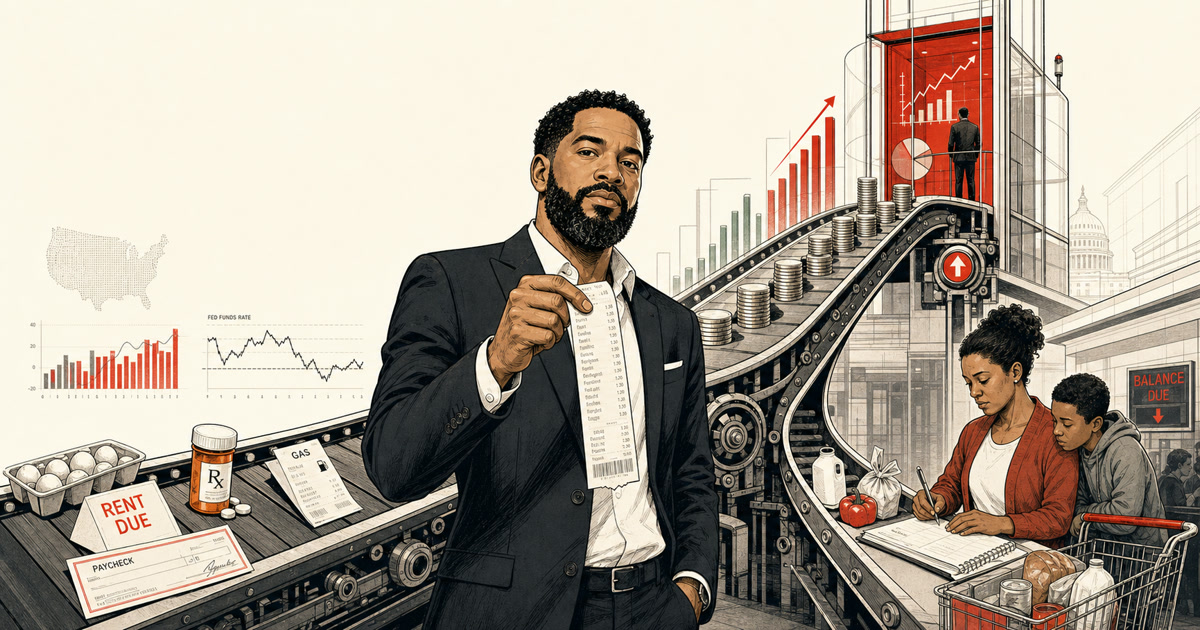
America did not build a broken economy. It built a sorting machine.
01 The cold open
The cruelest trick in American politics is telling people the economy is strong and then acting shocked when they do not feel rich. The stock market can climb. GDP can grow. Billionaires can clap for productivity. Cable panels can call the recovery "resilient" with the smooth confidence of people whose retirement accounts got the memo.
But a family does not live inside GDP. A family lives inside rent, groceries, debt, a car repair, a medical bill, childcare, student loans, and the quiet little panic of checking the bank app before buying something ordinary. That is the issue. Not whether the economy is "good." The question is: good for whom?
The top slice owns the elevator. Everybody else gets the stairs.
02 The confession
I used to think inequality was mostly a moral argument. Some people had too much. Some people had too little. We could debate fairness. We could argue taxes. We could pick our side of the ideological couch and pretend the argument was new.
But that frame is too small. Inequality is not just about envy. It is about control. If you own the assets, you do not just own more money. You own the upside, the compounding, the dividend, the stock pop after the layoff, the rent increase, the business value, and the political patience that comes from not being one emergency away from surrender. Everybody else gets told to work harder inside a machine designed to send the gains upstairs.
Bloomberg: "No reliable safe havens." Billionaires have been investing elsewhere. Here's how to get in.

Bloomberg's Marcus Ashworth wrote plainly recently: "No more reliable safe havens."
After all, the S&P fell over 7% from the February peak. Bonds, even with less risk, are barely keeping pace with inflation.
So-called "diversified" portfolios have gotten hit from multiple directions.
Meanwhile, the world’s wealthiest have been setting records in another asset class.
Circumstances are always unique, but after the dot-com bust, it grew roughly 24% annually for a decade. After 2008, roughly 11% annually for 12 years.
Blue-chip art.
Why? It trades globally in multiple currencies, has scarce supply, and has shown near-zero correlation to equities since 1995.*
With Masterworks, 70,000+ investors allocated $1.3B fractionally across 500+ artworks featuring Banksy, Basquiat, and Picasso.
Accredited? You can invest in a diversified portfolio of postwar and contemporary art alongside two other real assets. From 2017-2025, the mix would’ve beat the S&P 500 by 3.1x.
See if you can improve your portfolio performance all in one diversified strategy.
*According to Masterworks data. Investing involves risk. Past performance is not indicative of future returns. Important Reg A disclosures: masterworks.com/cd
03 The machine
Start with the Federal Reserve's latest Distributional Financial Accounts. In the fourth quarter of 2025, the top 1 percent held 31.9 percent of U.S. net worth. The top 10 percent held 68.3 percent. The entire bottom half of the country held 2.5 percent.
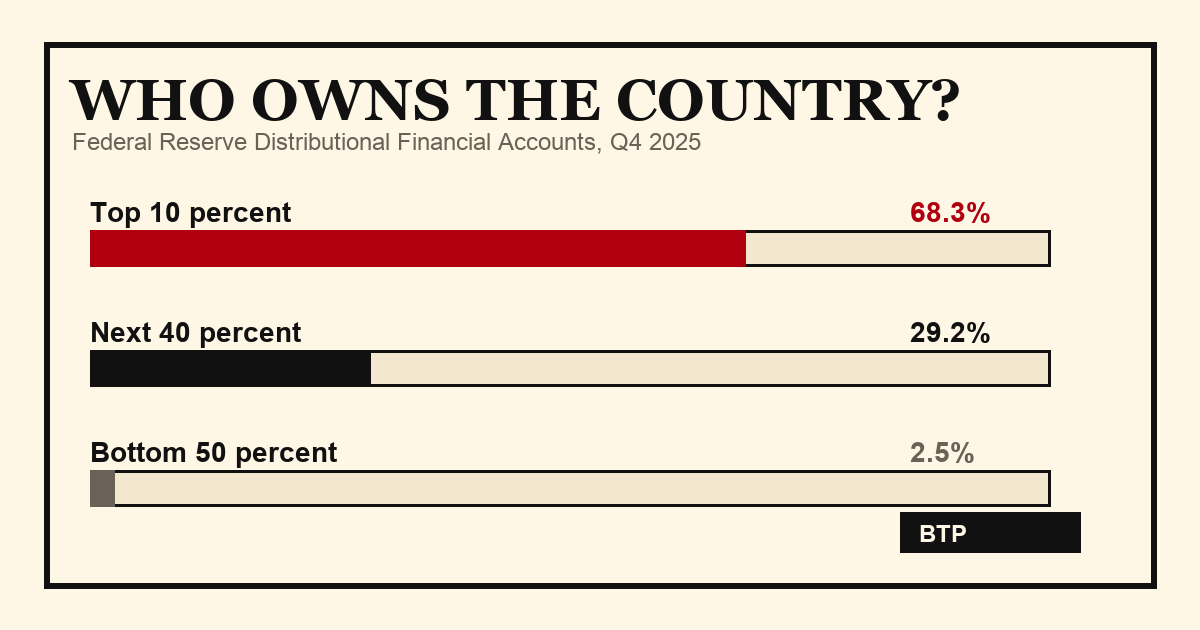
That is the machine in one sentence. Not vibes. Not resentment. The country's wealth is stacked like a private elevator. And the wealth that matters most is not just cash in a checking account. It is ownership.
The top 10 percent held 87.4 percent of corporate equities and mutual fund shares while the bottom half held 1.1 percent. The top 10 percent held 84.5 percent of private businesses while the bottom half held 1.0 percent. That means the gains from the ownership economy are not landing evenly because the ownership economy is not owned evenly.
04 The receipt
The income side tells the same story in a different accent. The Census Bureau's 2024 income report put the money-income Gini index at 0.488. The 90th percentile income was 12.61 times the 10th percentile income.
So when people say the economy is growing, the first question has to be: whose row got watered? Because the Fed's 2025 household-fragility data adds the kitchen-table punchline. Sixty-three percent of adults said they could cover a $400 emergency expense completely using cash or equivalent, which means 37 percent could not. Fifty-five percent had three months of emergency savings, which means 45 percent did not.
Zainith Agency is a boutique digital marketing agency exclusively focused on TikTok Shop.
They’ve worked with brands like Momofuku, Obvi, First Day, and more.
Book a call, spots limited.
This is the American contradiction: the richest country on earth can produce record paper wealth while millions of people are still negotiating with a $400 surprise.
05 The translation
Here is the grocery-store version. If you own stock, rising markets can make you richer while you sleep. If you own rental property, the rent increase is someone else's crisis and your new cash flow. If you own a business, a margin expansion can be called discipline. If you only own your labor, your raise has to outrun prices, debt, health care, housing, and the next broken thing in the driveway.
That is not a personal failure. That is a system design. The people at the top get paid when the machine appreciates. The people at the bottom get advised to be grateful when the machine hires.
06 The verdict
The economy is not broken. It is sorting. It sorts ownership from labor. It sorts asset inflation from wage stress. It sorts emergency savings from emergency fundraising. It sorts the people who benefit from volatility from the people who get buried by it.
And then politics walks in with a smile and tells the family on the stairs that the elevator proves the building is healthy. No. The building is not healthy because the penthouse got another floor. The question is whether the stairs are collapsing underneath everyone else.
The top slice owns the elevator. Everybody else gets the stairs.
That is not the American dream. That is the receipt.
07 State of the Race
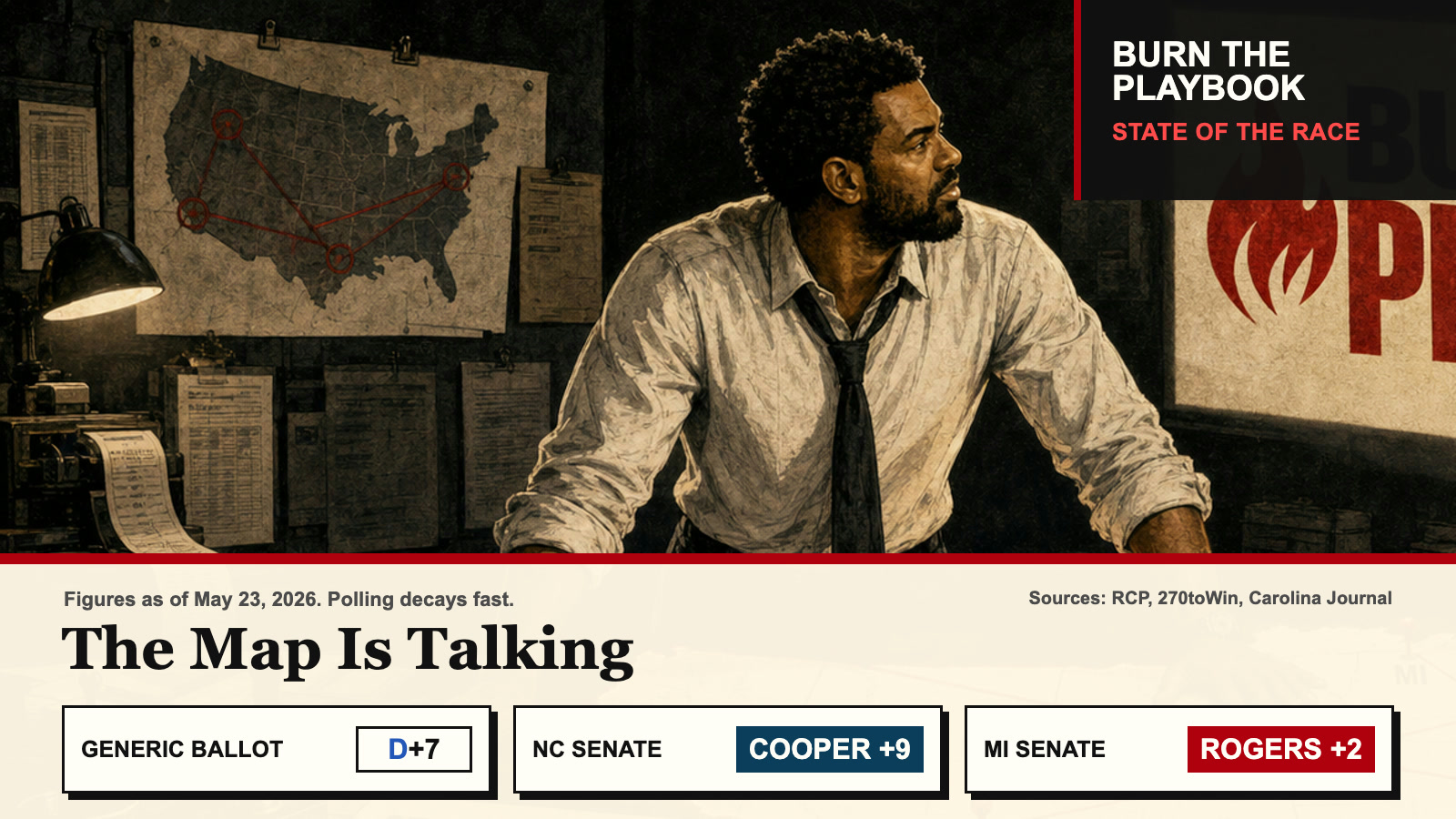
The economic argument is landing inside a live political fight. The same voters being told the economy is technically healthy are also being asked to decide who gets power next.
Polling decays fast, but the pressure point is already visible: the party that can explain the stairs beats the party that keeps pointing at the elevator.
08 Accountability Jobs
The people fighting rigged systems need staff, not applause.
- Current openings - Brennan Center for Justice - careers page
- Current openings - Protect Democracy - careers page
- Current openings - Campaign Legal Center - careers page
09 Read The Receipts Before The Elevator Doors Close
- Federal Reserve - Distributional Financial Accounts data
- Federal Reserve - SHED visualization data
- U.S. Census Bureau - Income in the United States: 2024
May the bridges we burn light our paths forward.
Subscribe to Burn the PlaybookWritten by Michael Starr Hopkins. Forward freely.