
In partnership with

Write docs 4x faster. Without hating every second.

Nobody became a developer to write documentation. But the docs still need to get written — PRDs, README updates, architecture decisions, onboarding guides.
Wispr Flow lets you talk through it instead. Speak naturally about what the code does, how it works, and why you built it that way. Flow formats everything into clean, professional text you can paste into Notion, Confluence, or GitHub.
Used by engineering teams at OpenAI, Vercel, and Clay. 89% of messages sent with zero edits. Works system-wide on Mac, Windows, and iPhone.
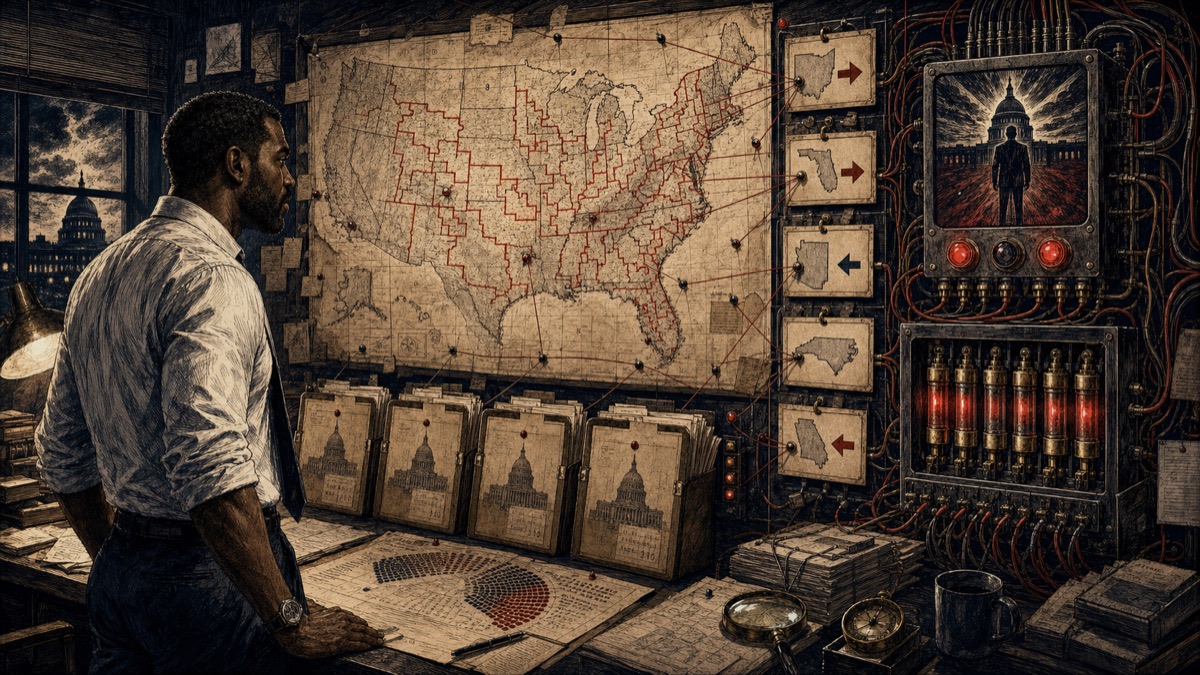
Map To The Future
Same voters, less power. Same rules, bigger consequences. The races on the board this year are already deciding what kind of country the next presidential field inherits.
I spent years in rooms where campaigns talked about voters like weather.
Black voters. Young voters. Union voters. Suburban voters. Rural voters. Persuadable voters. Drop-off voters. Low-propensity voters. The labels changed. The habit did not.
The room kept treating people like blocks on a spreadsheet and power like something that happened after Election Day. That was the lie.
The map is not process.
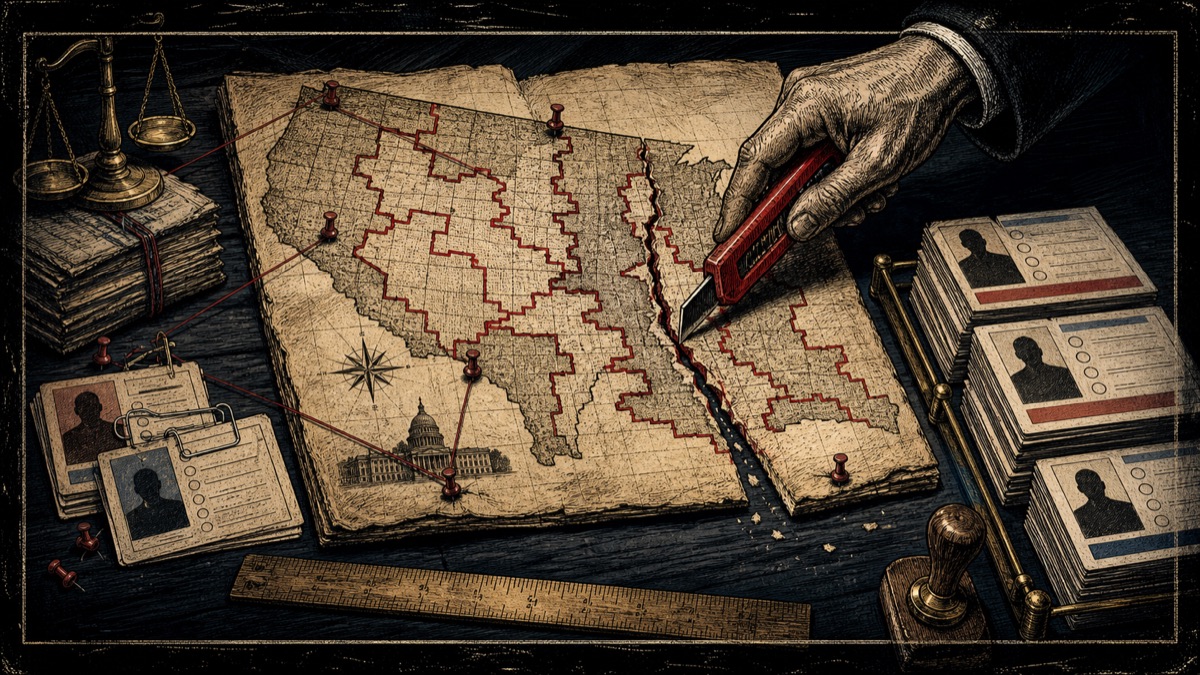
It is power before anyone votes. If the same voters count for less after the lines move, the election was decided before the first ad aired.
The House is not a mood board.
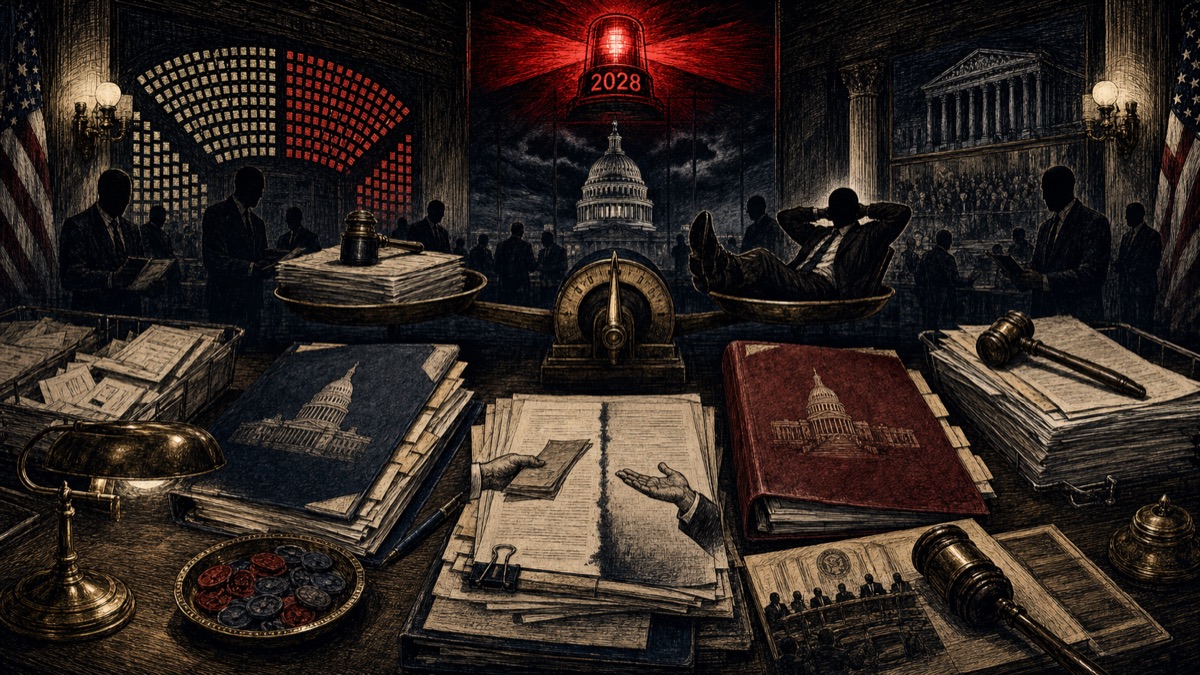
A majority decides whether 2028 gets subpoenas, hearings, document fights, and real oversight, or whether every scandal meets a shrug.
The governors decide what gets blocked.
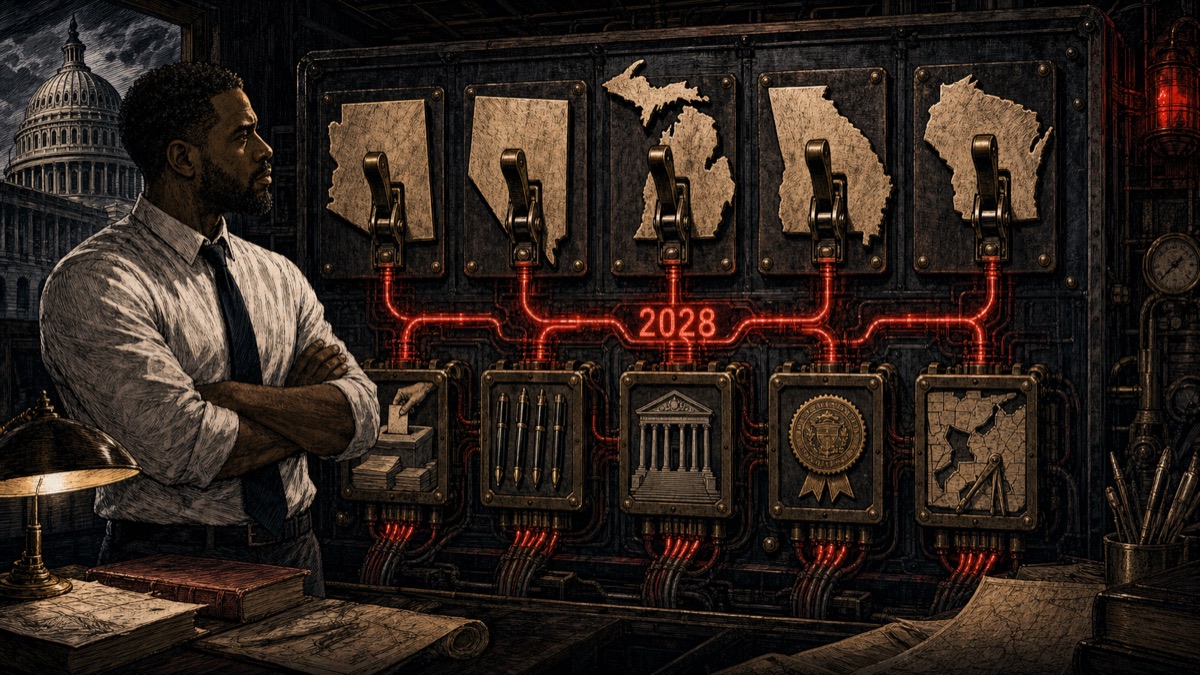
Arizona, Nevada, Michigan, Georgia, Wisconsin. That is where bad bills get vetoed or signed. Where election pressure gets resisted or rewarded. Where 2028 gets easier or harder before a nominee is picked.
The Story Starts Before The Speech
Power moves before voters get near it.
It moves when a map is redrawn around a neighborhood that did not move. It moves when a governor signs the bill or vetoes it. It moves when a state court decides whether the trick counts as procedure. It moves when a House majority can subpoena the paper or bury it under televised outrage.
That is why the 2028 race has already started.
Not on a stage. Not in a launch video. Not in some donor's living room where everybody pretends the country is simply waiting for the right biography.
It started before most voters were paying attention.
The Receipts
Here is what gets left out when politics gets covered like a scoreboard: the score is already being shaped before the voter shows up.
Who moved the line? Who got protected? Who lost power without moving an inch?
01. The 2026 House majority is the first 2028 oversight fight. The question is not only who controls the floor. The question is who can force the paperwork into daylight as redistricting fights keep moving power before voters arrive.
02. The Senate map is the stress test. Michigan tests purpose. Georgia tests prevention. North Carolina tests biography against the courthouse. Maine tests the donor class. Ohio tests appointment.
03. Governors are presidential infrastructure. Arizona, Nevada, Michigan, Georgia, and Wisconsin sit over vetoes, election administration, certification pressure, courts, maps, schools, labor, and abortion rights.
04. Early 2028 polling is recognition, not permission. It tells us who voters can name before the fight starts. It does not tell us who survives disgust, donor pressure, inflation, and the demand for proof of combat.
What The Numbers Are Really Saying
Here is the math.
The numbers are not complicated. They are just being discussed by people with an incentive to make them sound complicated.
Hold the big number in your head: undecided voters are not empty space. They are voters refusing to sign the permission slip.
Michigan Senate: Glengariff has Stevens 24.9, El-Sayed 22.9, McMorrow 16.0, with 36.0 undecided. That is not a stable race. That is a party looking at three versions of itself and refusing, for now, to sign the permission slip.
Michigan's real number: 47.7 percent undecided out-state, 41.3 among voters 18-39, 39.9 among women, 39.6 among union voters. That is not apathy. That is withheld permission. Nobody has closed the argument.
North Carolina: Cooper leads Whatley by roughly eight to nine, but High Point has the state Supreme Court race tied. Biography can outrun the party. Biography cannot secure the courthouse by itself.
Maine: Mills was supposed to be the recruited answer. Proven. Familiar. Safe. Platner outraised her, outpolled her, and made the donor class look mortal.
Georgia: AJC says a plurality of GOP Senate primary voters remain undecided among Carter, Collins, and Dooley. That is post-Kemp Republicanism deciding whether it wants spectacle, discipline, or a donor-safe outsider wearing local clothes.
2028: Echelon's Democratic rows show no one owning the future. The deeper contradiction matters more: voters say move center, but they also want more combat. That is not confusion. That is exhaustion with polished surrender and performative rage.
The Read
They want proof. What did you fight? Who got mad? What did it cost? What changed after the cameras left?
The Public-Record Read
The receipts do not say everybody is bad. They say something more useful: every campaign is a machine. The question is who the machine serves.
Michigan is the cleanest example. Stevens is the inherited machine. El-Sayed is the insurgent machine. McMorrow's lane is not purity. It is proof: can attention become organization, and can money become trust?
Rogers is the November warning label: Florida residency questions, Trump dependency, abortion/personhood exposure, Medicare drug-price votes, surveillance politics, and revolving-door money.
Whatley, Husted, Collins, Mills, Platner, Hobbs, Lombardo, and the open governor fields all point to the same thing: public records are not gossip. They are pattern recognition.
The Better Question
Do not ask whether a candidate can win a news cycle. Ask what power they get if they win, and who they will use it for.
What The Room Keeps Missing
The room keeps treating maps, governors, and House control as separate beats. They are not separate.
A redrawn map decides who wins a committee gavel. A governor decides whether the state is a firewall or a permission slip. A Senate race decides whether a donor network gets another vote or meets a candidate the money has to answer to.
The mistake is talking about 2028 like it begins with a launch video. It begins with the levers.
I know why the old way is tempting. I have helped sell the old way. Keep the message tight. Do not scare the donor room. Do not admit the party failed working people. Do not say the rules are built to protect power because someone will accuse you of sounding too angry, too left, too cynical, too whatever word the room uses when it wants the public to lower its expectations.
I was wrong.
The public already knows the system is broken. The question is whether anyone running in 2026 or 2028 is brave enough to stop describing the wreckage like a weather event.
The Honest Line, Tragically Still Legal
Democrats lose when they describe power like homework. Voters need one sentence that survives the grocery store. The voters stayed put. The power moved.
2026 Watch — Where The Power Hides
House: The oversight fight. Do you want the next scandal investigated or excused?
Michigan Senate: Stevens is the inherited operation. El-Sayed is the insurgent operation. McMorrow has to prove attention can become organization. Rogers waits with Florida questions, Trump dependency, abortion/personhood exposure, Medicare drug-price votes, surveillance politics, and a revolving-door money trail.
Georgia Senate: The purpose test. Ossoff has money and a national profile. The question is whether voters feel a reason beyond prevention.
North Carolina Senate: Cooper is the neighbor with a record. Whatley is the party apparatus trying to sound local, carrying Trump dependency, lobbyist baggage, private-flight optics, and a verified judgment problem from the Harvey West appointment controversy.
Maine Senate: Collins' brand faces the record; Mills faces the primary mood; Platner faces the file.
Ohio Senate: Brown carries the old working-class brand. Husted carries appointment, donor orbit, Issue 1 baggage, and the FirstEnergy/HB6 shadow.
Governors Matter More Than The Speeches
Arizona tests whether election-denial pressure gets blocked. Nevada tests whether split-ticket voters punish chaos or tune it out. Michigan tests what comes after Whitmer. Georgia tests the post-Kemp fight. Wisconsin tests whether the next governor protects veto power after Evers.
These are not side races. They are the offices that decide whether bad ideas get stopped or signed into law.
2028 Watch
The Test
What did the candidate fight? Who got mad? What did it cost? What changed after the cameras left?
Republicans: Vance starts with the strongest claim to Trump's coalition. Inheritance is not ownership. Trump Jr., Rubio, DeSantis — different answers to the same question. Who gets permission to drive the movement while Trump still owns the keys?
Democrats: Harris, Newsom, Buttigieg, AOC, and the unknown fight candidate are five theories of what the party thinks voters want after exhaustion. Restoration. Performance. Polish. Combat. Or a verdict from outside the donor hallway.
The Plain Sequence
A case is not built by saying the defendant is bad. A case is built by proving the sequence. Date. Action. Beneficiary. Silence. Next date. Next action. Same beneficiary.
That is why this issue is not about whether gerrymandering is bad. The question is sequence: map moves, power shifts, committee changes, subpoena disappears, governor signs, court blesses, candidate launches, voter gets told this is just how politics works.
Someone makes the rule. Someone benefits from the rule. Someone tells the voter not to worry about the rule. Then the same people act shocked when the rule decides the result.
You do not need a law degree to understand that. You need the dates, the beneficiary, and common sense.
Field Plan
Say: Same voters, less power.
Show: before map, after map, community split, politician protected.
Demand: every 2026 candidate must answer one question: should the map, the court, the governor, and the certification rule make voters weaker before 2028 starts?
Build: a 24-hour response plan for every court ruling, statehouse move, and redistricting stunt.
Ask: what power does this candidate get if they win, and who will they use it for?
The 2028 race will not be decided only by the person who gives the best speech. It will be decided by the power already sitting there when that person arrives.
If the House cannot subpoena, the scandal waits. If the governor cannot veto, the bill moves. If the map is cut, the same voters count for less.
That is the map to the future: who can investigate, who can veto, who can certify, who can draw the lines, and who gets told their vote matters less.
A race-by-race field file
One local receipt, one beneficiary, one doorstep line, and one question the candidate cannot answer with mush.
May The Bridges We Burn Light Our Path Forward.